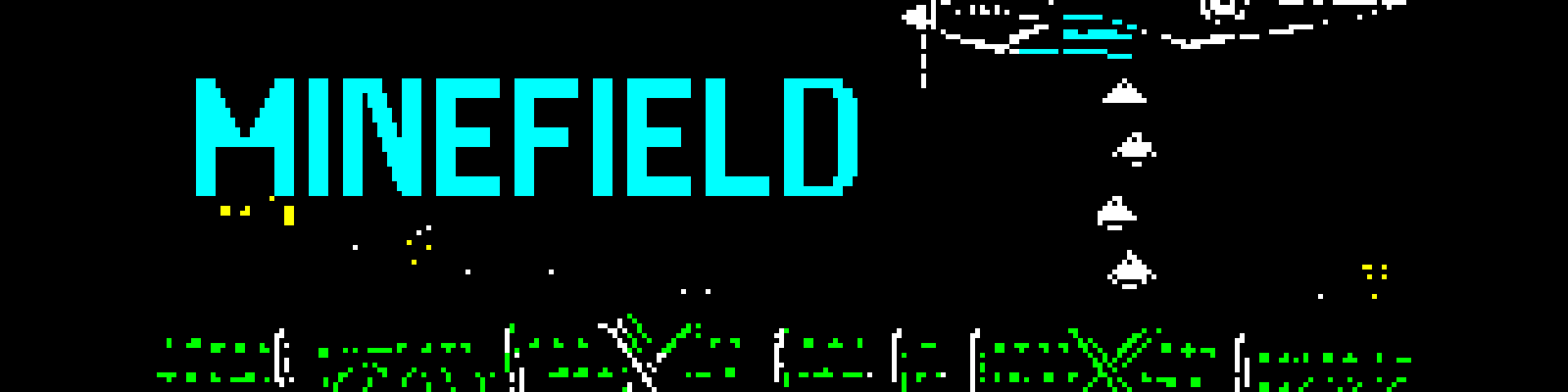
Minefield
You are never shown the mines.
Step, and the field answers. A short beep means one mine is touching you. A faster, higher one means two. Four is an alarm. That count is the whole game: it tells you how many mines are on you, never which side they are on. Everything after that is deduction — walk the edge of what you know, cross two counts against each other, and a mine's position falls out of the arithmetic.
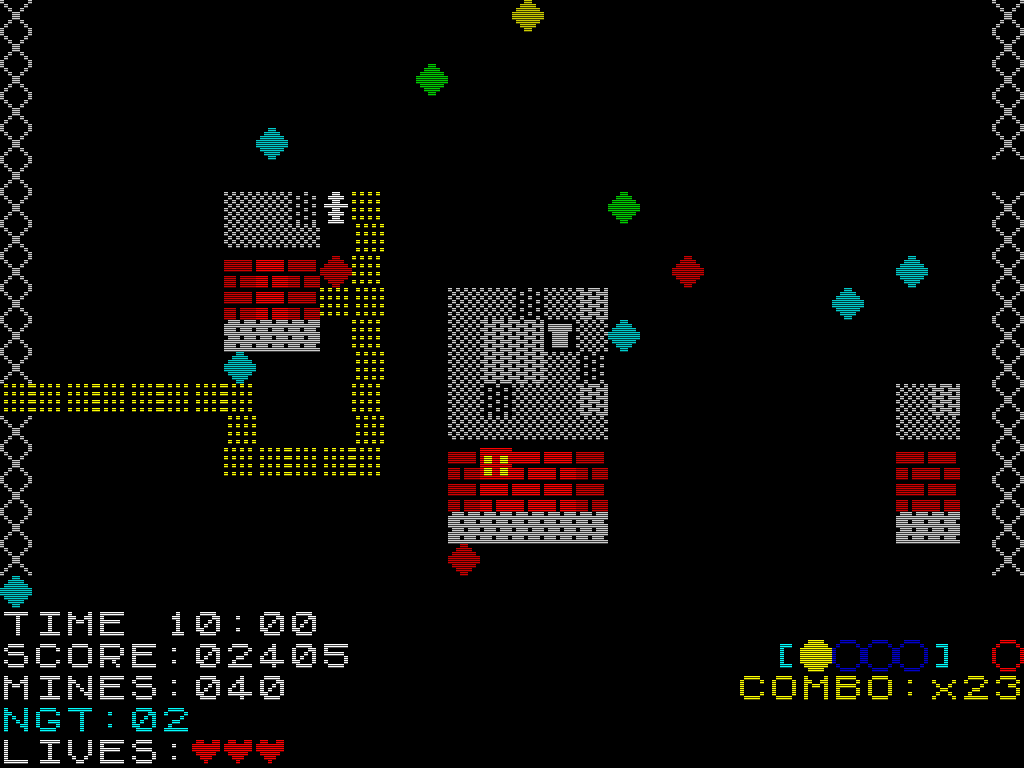
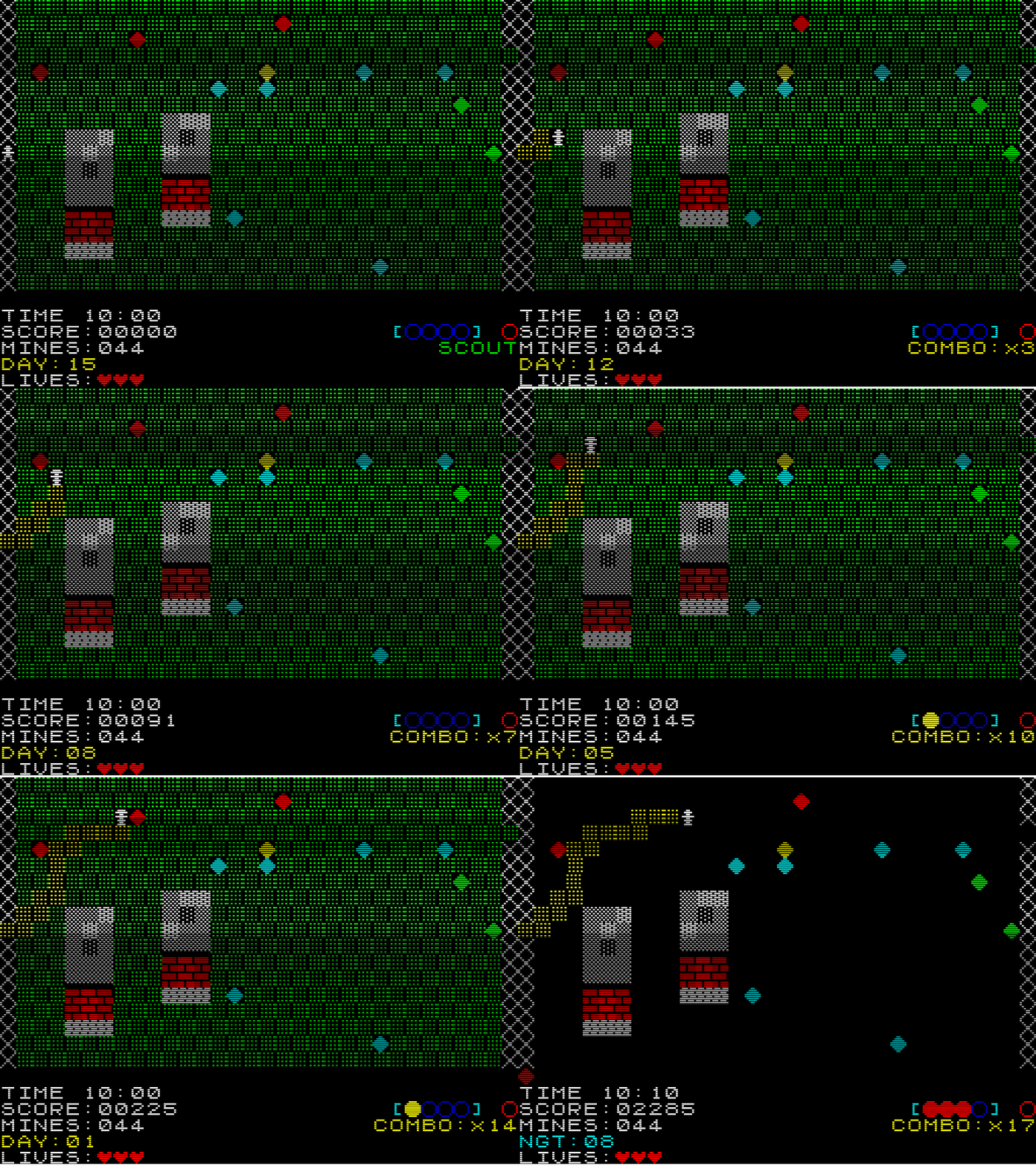
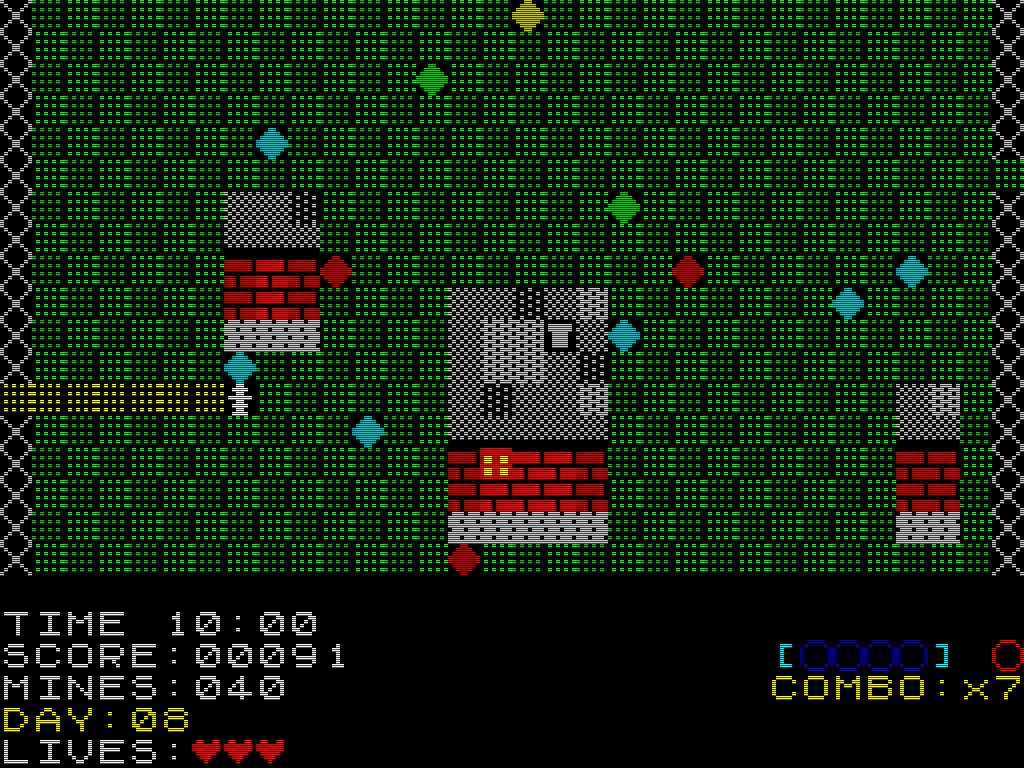
Your own footprints are the one thing that stays safe. The yellow trail behind you is ground you have already proved, and nothing the sky drops later will land on it. The field is not a maze to memorise; it is a small proof you build one step at a time, and can always retreat along.
From level three the arithmetic gets harder: a rarer cyan beacon mine reaches two cells instead of one, so a count you were sure you understood stops adding up.
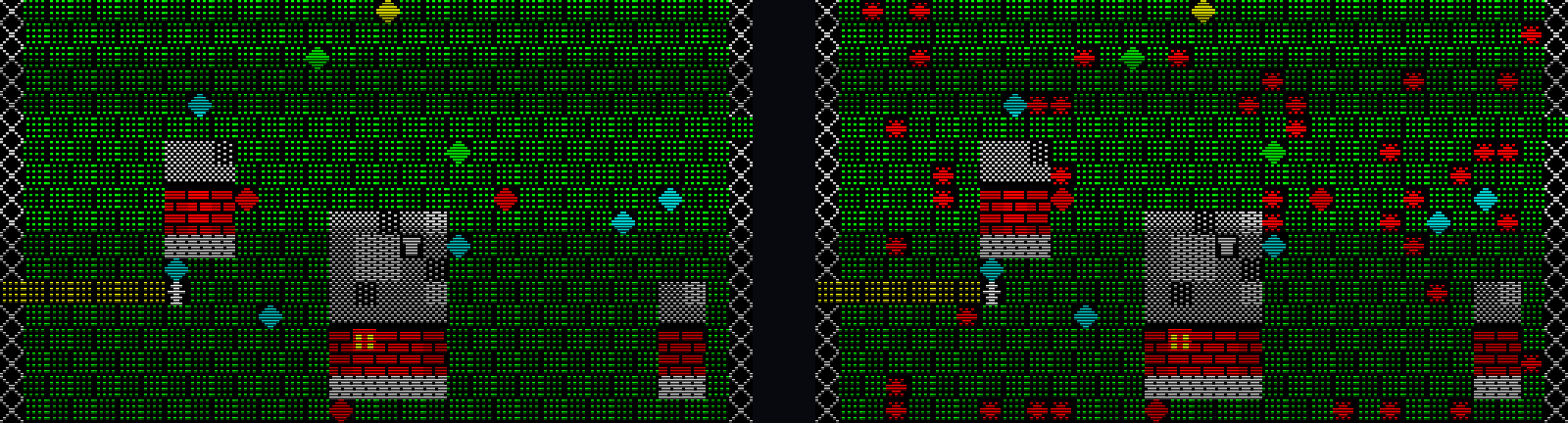
The same field twice: what you are shown, and what is actually there. That reveal exists only in practice mode — in the daily it is switched off, because seeing the answer would be the answer.
One field a day. Everyone gets the same one.
The minefield is grown from the date, so the field you are cursing at is the field everyone else is cursing at. Daily runs go on the score table. Random runs never do — they are for practice, and the game keeps them off the board even across a save and a reload.
Every daily field is provably crossable. Generation doesn't hope: it runs a flood fill from the entry gap to the exit gap and throws the board away if no route exists. In the rare case where every reroll seals up, one shortest route is deterministically defused instead — so a repaired field is still identical for every player. The plane overhead is held to the same rule: a drop that would wall the field off is discarded, and a pass can legally place nothing at all.
You get ten minutes a level. Triangulating every square inch is a valid way to play, and running out of time is what it costs.
Built to be played blind. And deaf.
Not "compatible" — playable, start to finish, including the menus. This is the thing the game is actually for, so it isn't in the footnotes.
Without sound. The game is audio-first, never audio-only. Every warning the beeper makes has a twin on screen: a four-segment danger meter counts the same mines the beeps count, a separate LED covers the long-reach mines, and the full end-of-run summary is drawn as well as spoken.
Without sight. The game never speaks for itself. It mirrors what is on the canvas into ARIA live regions and lets your screen reader read it, in its voice, at your speed. On top of that:
- D — sonar sweep. Pings every mine in range: panned east-west, pitched north-south, quieter the further out. Unlimited; the only cost is the clock.
- E — exit beacon. A tone that grows louder as you close on the exit column, and becomes a double beep once you are level with it.
- G — the nearest gem, its colour, and how many are left.
- Earcons for the rest: which cell you just flagged, taking a flag back, a step refused by a wall, pause and resume.
- H — the full briefing on any screen: goal, controls, rules, glossary, and what each sound means.
The bearings are parity, not assistance: a sighted player can see the exit and the gems before taking a step, so hearing them evens the field. The mines stay hidden for everyone — that part is the game.
What's out there
Twelve gems a level. Every one is a thousand points; the colour changes everything else. Red hands back ten seconds, and two of them buy a life. Cyan gives no time at all — but three of them permanently reveal a live mine, which is why the six on the level are a real decision rather than free points. Two green call in a recon plane that sweeps a whole row. The single gold is worth five thousand more and half a minute.
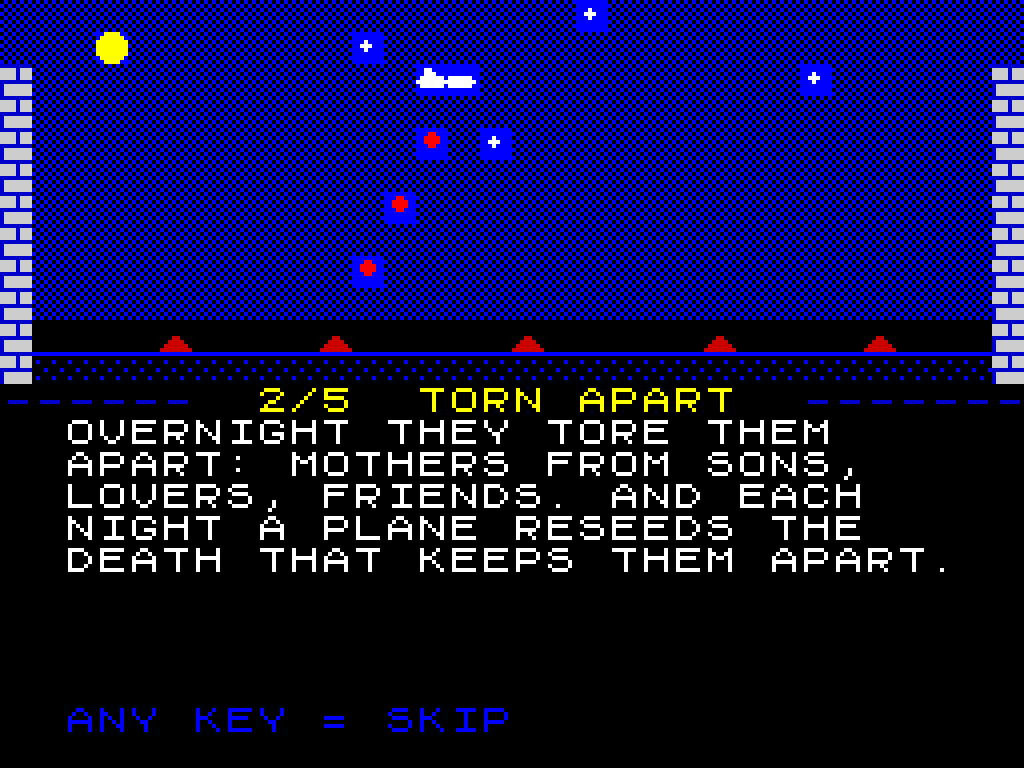
Two planes. The red one is why the field is never finished: it crosses, drops, and the ground you hadn't reached yet is a different problem now. It announces itself before it arrives, and it will not drop on your trail. The white one is yours, bought with green gems.
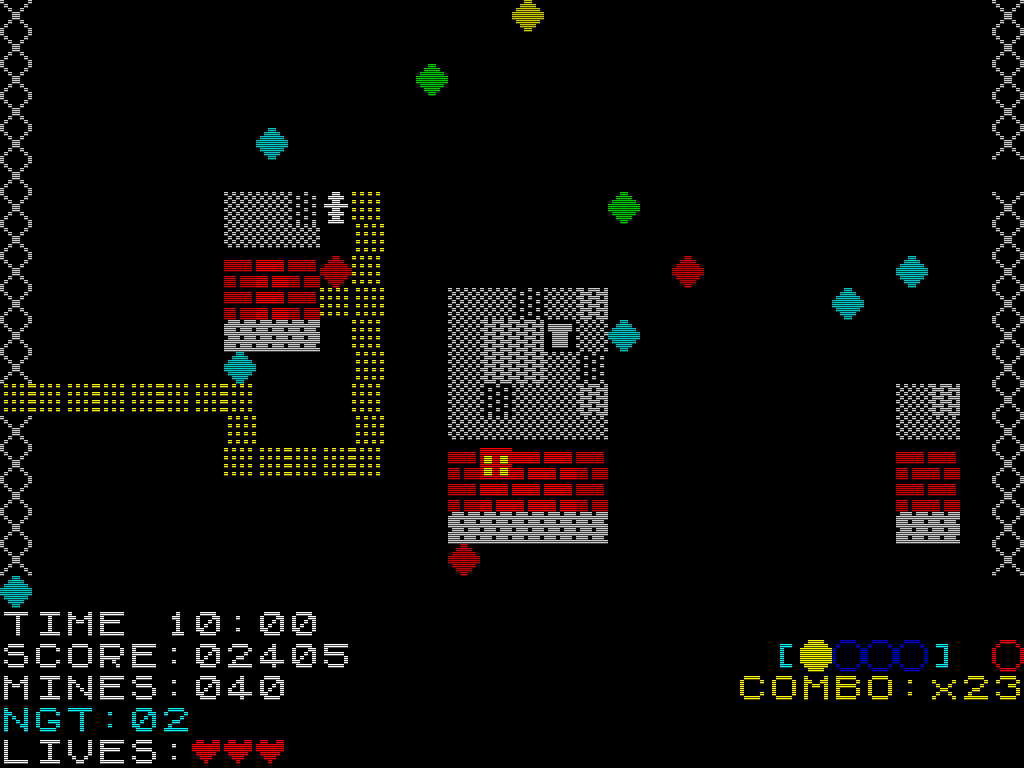
Night. Fifteen steps of daylight, then ten in the dark. Night blacks out every cell you have not walked — your trail, the gems and the buildings stay lit. Same field; you have simply stopped being able to see the part you were about to guess at.
Craters. A mine that goes off leaves a grey grave cross, and nothing ever overwrites it. It is the only record of where a life went, and it stays there for the rest of the run.
Controls
Keyboard throughout; a gamepad works everywhere and is never required.
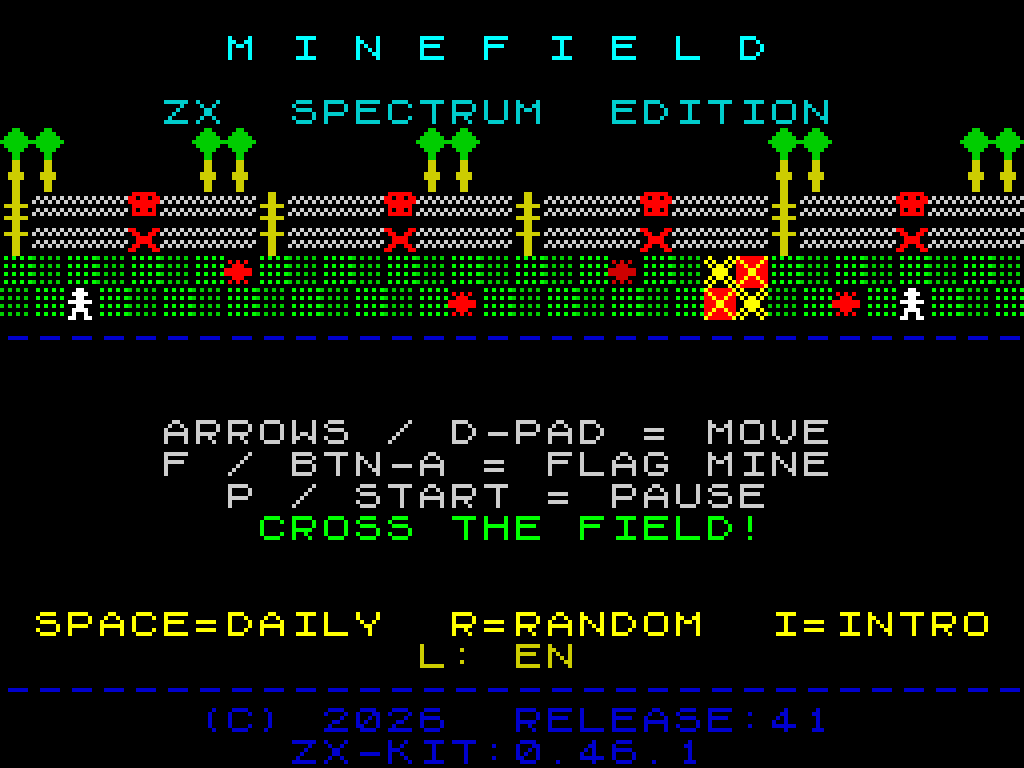
- Arrows — move one cell. Orthogonal only, which is why diagonals never count towards a warning.
- F — flag the cell in front of you. Shift + arrow flags in that absolute direction.
- D — sonar sweep, always. Plus a visual reveal, budgeted in practice and switched off in the daily.
- E · G · H — exit bearing and beacon · nearest gem · the full spoken briefing.
- P — pause.
- Shift + S — save. The game also saves at every level, and clears it on game over.
- L — English or Slovak, including everything the screen reader says.
The game opens on a loading picture and waits for one key — Enter, gamepad Start, or a tap. That key is also what switches the sound on: a browser won't let a page make a noise until someone has touched it, so the game asks up front rather than surprising you later.
Playing offline
The browser version installs as an app and then genuinely works with the network cut. There is also a macOS download with a small launcher, if you would rather keep a copy.
One thing worth knowing: high scores live with the copy you play. Browsers keep each address's data separate, so the version here on itch, an installed copy and the macOS download each keep their own table. Nothing is lost, but they don't merge.
Made with
Vanilla TypeScript, HTML5 Canvas and the Web Audio API — one dependency, no game framework. 256 × 192 at integer scaling, the fifteen Spectrum colours and no others, one ink and one paper per 8 × 8 cell. Every sprite is eight bytes of source; the loading screen is a native .scr. The beeper does the game, and the AY chip is reserved for the story intro and nothing else.
Free, and meant to stay that way. It was built in collaboration with AI, which is declared on this page rather than buried — the point of the project was to learn in the open and to make something genuinely playable by people the medium usually forgets.
Download
Leave a comment
Log in with itch.io to leave a comment.